Getting Through Hard Times as a Man

I was 31, sitting alone in a one-bedroom apartment in Phoenix at 2am, staring at a phone that wasn't ringing. The business I'd poured three years into had just collapsed. My relationship had ended six weeks earlier. I had more debt than I'd admitted to anyone — including myself. And the worst part wasn't the money or the loneliness. It was the silence inside my own head where ambition used to live. That silence is what scares me most about hard times. Not the pain. The quiet.
If you're reading this, you've probably heard that silence too. Maybe it came after a job loss, a breakup, a health scare, or just the slow, grinding accumulation of years not going the way you planned. Every man who's reached out to me after reading The 88 Laws of the Masculine Mindset shares the same thread — not the failure itself, but the way failure got inside their head and started whispering that it was permanent. That whisper is the real enemy. Not the circumstances.
Getting through hard times as a man requires three things: refusing to set up camp in pain, rebuilding forward momentum with ruthless consistency, and using the darkness as raw material instead of a residence. That's the answer. What follows is how you actually do it — without the platitudes.
Why Most Men Stay Stuck After a Painful Experience
Here's the uncomfortable truth most self-help content won't touch: some men start to enjoy their suffering. Not consciously. But pain has a secondary market — it pays in attention, in sympathy, in the temporary relief of having a reason not to try. When you're the guy who got screwed by his business partner, his ex, the economy, whatever — you have a story. And if you're not careful, that story becomes your identity.
Marcus Aurelius understood this centuries before modern psychology gave it a name. In Meditations, he wrote: "The impediment to action advances action. What stands in the way becomes the way." But he also knew that orientation had to be chosen. It doesn't happen automatically. The default gravity of pain pulls toward victimhood, not strength. It pulls toward the group — because misery genuinely loves company, and there's an entire ecosystem of men online right now who've built identities around shared grievance. Spend enough time there and you'll find men who haven't done anything productive in years but can articulate, with remarkable precision, every reason the world owes them something.
The psychological trap works like this: victim mode removes the burden of responsibility. And removing responsibility feels like relief. It's the same relief as taking your shoes off when your feet hurt — good for five minutes, and then your feet are still broken and now you're also barefoot in the cold.
The moment you honestly examine why you failed and accept that your choices contributed — even partially — is the moment your power returns. Because if your choices helped create the problem, your choices can help build the solution. That's not blame. That's leverage.
The Momentum Trap: How Darkness Builds Velocity
Pain doesn't just hurt in the moment. It creates negative momentum. Think of it as a physical force — one bad event makes the next bad decision easier, almost automatic. You lose your job, so you stop training. You stop training, so your energy craters. Your energy craters, so you stop going out. You stop going out, so you isolate. You isolate, so your mind turns on you. Each individual step feels minor. The cumulative effect is catastrophic. Six months later you're barely recognizable to yourself and you can't point to the exact moment it went wrong because it was never one moment — it was a hundred small surrenders.
Nassim Taleb's concept of antifragility is essential here. Most men are built fragile — conditioned by comfort, predictability, and the illusion that life is supposed to be fair. When reality deviates from that expectation, they shatter. The antifragile man uses disruption as data. He asks: what is this forcing me to fix? What weakness did this expose? What would I never have learned if things had gone smoothly?
I'm not romanticizing suffering. Pain is not a gift. But it is information — and information is only valuable if you're willing to read it. As I detail in The Obstacle Is the Way to Alpha Mindset, the men who come out of hard times stronger aren't the ones who suffered less. They're the ones who extracted something useful from the suffering instead of letting it extract something from them.
Breaking negative momentum requires a physical interruption. Not a mindset shift first — a physical one. Get up. Shower cold. Walk outside for twenty minutes. Do thirty push-ups on your bedroom floor. Your nervous system needs to experience something different before your brain will accept a different story. This isn't metaphor — it's neuroscience. Movement breaks the neurological loop that keeps you replaying the same catastrophic thoughts. The body leads, the mind follows.
When Did You Stop Dreaming — And Who Convinced You To?
Think back to when you were eight or nine years old. You had dreams that were completely unreasonable by adult standards. You wanted to be an astronaut, a fighter, an inventor, a champion. You talked about those dreams without embarrassment because you hadn't yet learned that the world punishes ambition with ridicule.
Then it happened. Someone laughed. A parent told you to be realistic. A teacher ranked you against your classmates and made sure you knew exactly where you stood. And slowly — over years, not days — you learned to make your dreams smaller so fewer people would laugh. You learned to want less so rejection would hurt less. You traded magnificent for manageable and called it maturity.
It wasn't maturity. It was surrender dressed up in responsible language.
The Wright brothers were considered delusional. Two bicycle mechanics from Dayton, Ohio who thought they could build a flying machine. Smarter men with better credentials and more funding had already tried and failed. The academic consensus was that powered flight was decades away, if possible at all. Wilbur and Orville did it anyway — December 17th, 1903, Kitty Hawk, 12 seconds of flight that permanently changed what humans believed was possible. What separated them wasn't intelligence or resources. It was refusal. Refusal to let other people's limited imagination become their ceiling.
Whatever you're going through right now — whatever stripped you down to the studs — consider that it might have done you a service. It might have cleared out the fake version of your life to make room for something real. Find your purpose, then walk alone if you have to. The loneliness of the right path beats the comfort of the wrong one every single time. That's not poetry. That's the only math that matters.
Showing Up: The Underrated Law of Recovery
I call it The Minimum Viable Action Protocol. When everything is in free fall and you don't know what to do next, you strip it to the irreducible minimum: show up. Not perfectly. Not confidently. Not with a plan that accounts for every contingency. Just physically present in the arena.
Make the call. Send the email. Walk into the gym. Go to the networking event you've been avoiding. Have the hard conversation with your boss that you've been rehearsing in the shower for three weeks. Showing up when every cell in your body is telling you to stay horizontal is the single most undervalued act in any recovery arc. It sounds too simple to be the answer. That's why most men skip it and look for something more sophisticated.
Jocko Willink's framework from Discipline Equals Freedom applies directly: you don't wait to feel ready. Readiness is a story your comfort zone tells you to keep you stationary. Action comes first. Feeling follows. Not the other way around. Every man who has rebuilt something from wreckage will tell you the same thing — they didn't start because they felt confident. They started despite feeling the opposite, and the confidence came from watching themselves do the hard thing anyway. That's where self-respect is built. Not in easy moments.
What's the specific thing you've been avoiding? Not generally — specifically. Is it calling that client back after you dropped the ball? Is it walking into a gym for the first time in eight months? Is it sitting down with your bank statements and actually reading the numbers instead of pretending they don't exist? That thing — whatever makes your stomach tighten when you think about it — that's your first move. Every journey of a thousand miles starts with that one step. But men forget that the step must be taken before you can see what the second step looks like.
Stop Consuming, Start Contributing
One of the fastest exits from a pain spiral is to stop asking what you need and start asking what you can give. This sounds wrong when you're running on empty. It works anyway — because it forces a fundamental shift in your psychological orientation.
When you're stuck in hard times, you're consuming. Consuming attention, sympathy, other people's emotional energy. The moment you contribute — even something small, a genuine word to a friend, showing up for someone else's problem, mentoring someone further behind on the path than you — you flip the internal switch. You go from receiver to giver. And givers, by definition, operate from a position of having something to offer. That internal posture matters more than the size of the external action.
Jordan Peterson's framework here is precise: aim at something meaningful. Not grand — meaningful. And meaning almost always involves contribution. Building something. Helping someone. Creating something that didn't exist before you put your hands on it. Having a clear life mission isn't a luxury reserved for men who have everything figured out — it's the instrument you use to figure it out. Purpose doesn't wait until your circumstances are clean. It clarifies your circumstances by giving you a direction to point toward.
The 40% Rule: You Haven't Hit Your Limit
There's a dangerous idea circulating in men's spaces: that the goal of hard times is to become comfortable with discomfort. That's wrong. Comfort with discomfort is not the goal. Effectiveness in discomfort is the goal — and then moving through it toward something better.
David Goggins built his entire operating philosophy around a biological reality: the human mind quits at approximately 40% of its actual capacity. Forty percent. When you think you've hit your limit — when everything in you is screaming stop — you're not even halfway there. The hard times you're in right now are trying to show you what lives beyond that 40% threshold. Most men flinch and turn back. They call it wisdom. It's not wisdom. It's the 40% talking.
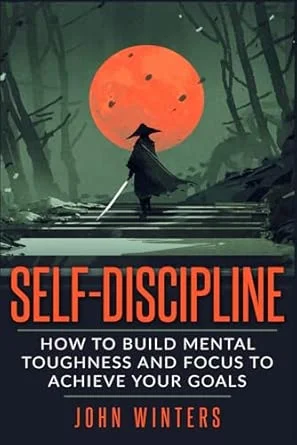
I tested this personally during the year after the Phoenix collapse. I committed to training every morning at 5am regardless of how little I'd slept, regardless of how the business was going, regardless of whether I felt like a fraud. Ninety days in, something shifted. Not in my circumstances — those were still a mess. In me. The man who shows up for himself when there's no external reward, no audience, no immediate payoff — that man starts to trust himself in a way that no amount of easy success can produce. As I wrote in Self-Discipline: discipline isn't what you do when you feel good. It's what you do at 11pm when you're exhausted, the results aren't visible yet, and every reasonable voice in your head is telling you to stop. That's where character is actually forged — not described, forged.
The Past Has No Votes on Your Future
Your past doesn't determine your future. You've heard that. And when you're in the middle of a real crisis — real debt, real loss, real missed opportunity — it sounds like something printed on a gym poster above a stock photo of a sunrise. So let me say it differently.
The past has information. Mine it ruthlessly — understand what went wrong, what you'd do differently, what pattern you need to break before it breaks you again. Extract the lesson with both hands. Then release the event. Carrying the emotional weight of failures you cannot undo is like driving with the parking brake engaged. You can still move forward, but you're burning energy that should be going to the road ahead.
Robert Greene writes in The 48 Laws of Power that the greatest power move is often the willingness to start over without sentimentality. The men who rebuilt empires — financial, creative, personal — didn't do it by being attached to what they lost. They did it by being ruthlessly focused on what they were building. Seneca put it more bluntly two thousand years ago: "Omnia, Lucili, aliena sunt, tempus tantum nostrum est." Everything is borrowed, Lucilius. Time alone is yours. Stop spending it rehearsing the past.
The day you take full ownership of your current situation — not blame, ownership — is the day your agency returns. Because ownership and agency are the same thing wearing different clothes. And reclaiming your personal power starts the moment you stop waiting for circumstances to change and start being the thing that changes the circumstances.
What To Do When Life Gets Hard: The Practical Framework
Let's make this concrete, because vague advice is the enemy of actual recovery. Here's what the framework looks like in practice when everything is falling apart:
Step one: Stabilize the body. Sleep, food, movement. In that order. You cannot think clearly on four hours of sleep and a diet of convenience store garbage. This isn't self-care content — this is operational readiness. You can't fight if you're running the body into the ground.
Step two: Identify the one thing. Not the ten things you need to fix. The one thing. The most urgent, most consequential problem on the board. Handle that first. Everything else waits. Spreading your attention across fifteen problems simultaneously is how men feel busy while making no actual progress.
Step three: Cut the bleed. Whatever is draining you — the relationship that's going nowhere, the expense that doesn't belong in your current financial reality, the habit that's costing you more than it's giving — cut it. Hard times require austerity. Not forever. Right now. You don't fix a leaking ship by bailing faster. You fix the leak.
Step four: Rebuild one cornerstone habit. Just one. Morning training. Daily reading. Weekly financial review. Pick the habit that, if consistent, creates the most downstream benefit. Stack everything else on top of that foundation once it's solid. This is the approach I outline in How To Change Your Life In 30 Days — not a complete overhaul, one cornerstone that makes everything else possible.
Step five: Find a man further ahead and shut up enough to learn. Mentorship isn't a corporate program. It's paying attention to men who've already been where you are and came out the other side with something to show for it. Read their books. Study their decisions. Ask better questions than "how did you make money" — ask how they thought when everything was wrong.
The Long Game: Hard Times Are Not the End of the Story
Miyamoto Musashi spent years as a ronin — a samurai without a master, without status, without belonging. He slept rough, fought constantly, lost people who mattered to him. He also wrote The Book of Five Rings, one of the most studied strategic texts in history, and went undefeated in over 60 duels. The hard years weren't a detour from his greatness. They were the source of it. The conditions that forged the philosophy that forged the man.
Hard times are not the end of your story. But they will write the most important chapters of it — if you're willing to pick up the pen instead of waiting for conditions to improve before you start writing. The man who risks everything when it makes no sense to the people around him is the man history remembers. The safe men are footnotes. Sometimes they're not even that.
You're going to get through this. Not because the universe is fair or because things always work out — they don't, and anyone telling you otherwise is selling something. You're going to get through this because you're still reading, which means you haven't quit yet. And men who haven't quit yet have a chance. That's the only credential that matters right now.
Frequently Asked Questions
How do I stop feeling like a failure when going through hard times?
Stop trying to stop the feeling and start moving through it. Failure is information, not identity. The feeling of being a failure doesn't go away because you argued yourself out of it — it goes away because you did something hard despite it. Take one concrete action today, something you've been avoiding, and watch how the feeling shifts. Feelings follow action. Not the other way around.
Why does it feel impossible to rebuild motivation after a major setback?
Because you're waiting for motivation to show up before you start. That's the mistake. Motivation is a byproduct of momentum, not a prerequisite for it. You build momentum by taking action before you feel ready. Start absurdly small if you have to — five minutes of exercise, one email sent, one page read. The motion creates the emotion. Sitting still waiting to feel motivated is how men lose years.
How long does it take to get through a hard period in life?
There's no fixed timeline — but there's a fixed variable that controls it: how quickly you take ownership and start acting. Men who externalize blame stay stuck for years. Men who take full responsibility and immediately focus on what they can control tend to turn around significantly within 90 days. Not fully recovered — but moving, which is what matters. Progress beats perfection when you're rebuilding from wreckage.
Is it normal to feel numb or empty after a major loss?
Completely normal. The silence inside your own head after ambition or meaning collapses is one of the most disorienting experiences a man can have. Don't pathologize it immediately. Some of that numbness is your nervous system processing overload. Give it 72 hours of solid sleep, movement, and minimal stimulation — no doom-scrolling, no alcohol, no binge watching. If the numbness persists for weeks and is affecting basic function, talk to someone competent, not just a drinking buddy.
What's the first step when you don't know where to start rebuilding?
Stabilize the body first. Sleep, food, movement — in that order. You cannot make clear decisions from a depleted physical state. Once the body is functional, identify the single most urgent problem and handle only that. Not the list — the one thing. Clarity comes from action, not from planning. Start moving and the path reveals itself. Stay still waiting for clarity and you'll wait forever.