Alpha Mindset Habits That Actually Change Men
At 5:17 a.m. in a cold kitchen in Chiang Mai, I stood barefoot on tile, staring at a legal pad stained with coffee, and wrote down my last seven days. The phrase alpha mindset habits sounds dramatic online, but in real life it means something plainer: track your actions, face your excuses, and build a life from repeated behavior instead of mood. That morning I saw the truth in ink. I had worked, yes. I had also drifted, scrolled, snacked, delayed, and called it “thinking.”
I’ve changed my mind about one thing over the years. I used to think big change came from one hard decision, one heroic burst, one clean break with the past. It doesn’t, at least not usually. Big change comes from habits that look almost insulting in their simplicity. A notebook. A walk instead of another drink. Showing up when you’d rather hide. Saying no without writing an essay about it.
That’s the real center of these alpha mindset habits: not posturing, not domination, not some cartoon version of masculinity. The useful part is personal rule-making under pressure. A man decides what matters, then behaves in a way that proves he meant it.
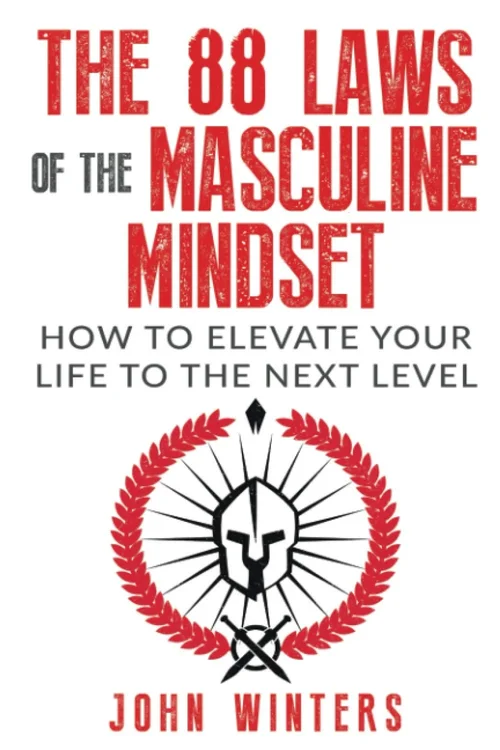
John Winters writes in Alpha Mindset that “action you take consistently has consequences.” That line works because it strips away the fantasy. Your future is not mainly a wish. Your future is your Tuesday afternoon repeated long enough.
Alpha Mindset Habits Start With a Brutal Time Audit
Alpha mindset habits begin with measurement, because vague self-respect collapses under specific numbers. Most men don’t need a new identity first. They need an honest record of where their hours actually go.
Years ago, in a cramped apartment above a laundromat in Toronto, I did this the wrong way. I told myself I was “building.” That was the word I used. Building what, exactly? Hard to say. I remember the rumble of the dryers through the floorboards and the blue light from my laptop at midnight. I was reading business threads, watching interviews, talking strategy, making plans. Very little shipped. Very little sold. I had confused exposure with execution.
So I sat down and logged every hour for a week. It was ugly. Two hours of “research” that was really avoidance. Thirty-five minutes checking messages from people I didn’t even like. Long stretches of fatigue caused less by work than by fractured attention.
The research on self-monitoring is less glamorous than the self-help industry, but it’s useful. In a 2019 meta-analysis, Rebecca L. Burke, Deborah F. Dunton, and colleagues found that self-monitoring consistently supported behavior change across health domains because it closes the gap between intention and reality. The review, “Self-Monitoring in Behavioral Weight Management: Systematic Review,” was published in Current Obesity Reports. You can read the paper summary through Springer: Self-Monitoring in Behavioral Weight Management.
No, your life is not a calorie log. Okay, that’s oversimplified. But the principle holds. Once behavior becomes visible, fantasy loses territory. You stop saying, “I’m trying,” and start saying, “I spent 11 hours this week on nonsense.”
"Every action you take consistently has consequences. Consistently not doing what you are supposed to do has consequences."
— John Winters, Alpha Mindset
If you want alpha mindset habits that actually change a man, start with one page and three columns:
- Kept: actions that moved your work, body, money, or relationships forward
- Wasted: actions that numbed you, distracted you, or let you hide
- Triggered: what happened right before the waste
The third column matters more than people admit. Men often try to cut bad habits at the level of willpower alone. The trigger is where the door opens: boredom after 9 p.m., shame after a hard email, loneliness on Sunday, one drink becoming four.
That’s part of why self-discipline for men that actually sticks isn’t mainly about screaming at yourself. It’s about making cause and effect visible enough that denial gets embarrassing.
The Hardest Alpha Mindset Habits Are Boring on Purpose
The most effective alpha mindset habits are usually repetitive, unsexy, and almost beneath your ego. Men quit good systems because the system stops making them feel special.
I learned this in a boxing gym in Cape Town. The place smelled like old wraps and metal. My coach, Daniel, wasn’t interested in motivation speeches. He wanted jab-cross-slip, over and over, until my shoulders burned and my mind started bargaining. I wanted novelty. He wanted form. I wanted to feel exceptional. He wanted me to become reliable.
That distinction follows you into business, fitness, dating, writing, all of it. The man who needs constant emotional fireworks won’t last long enough to become dangerous in any useful sense. He’ll start six things and quietly resent the seventh day of repetition.
Angela Duckworth’s work is often quoted badly, but one part deserves attention. In Duckworth et al. (2007), “Grit: Perseverance and Passion for Long-Term Goals,” published in the Journal of Personality and Social Psychology, the authors found that sustained commitment over time predicted achievement in demanding settings better than talent alone in many cases. Study page: Grit: Perseverance and Passion for Long-Term Goals.
The point for readers isn’t “have grit” as a poster slogan. The point is that long-term outcomes often favor the person who can tolerate useful boredom. A professional repeats standards after the excitement leaves. Winters says, “Become a Pro,” and that lands because pros don’t negotiate with every mood swing.
"Forget about having everything figured out when you start going after what you want. Nobody has everything figured out at the beginning. The most important thing is just showing up."
— John Winters, Alpha Mindset
Irritating cliché alert: “follow your passion.” I’ve never liked that phrase. Passion is unstable. It shows up late, leaves early, and often flirts with easier options. A better rule is this: build a structure your weak days can survive.
For most men, that structure includes a few plain things:
| Fantasy Habit | Useful Habit |
|---|---|
| Wait to feel ready | Start at the same time daily |
| Perfect morning routine | Three non-negotiables |
| Massive reinvention | Weekly review with receipts |
| Motivational content binge | One hard action before media |
I don’t mean boring as punishment. I mean boring as friction reduction. If your workout clothes are laid out, your phone stays outside the bedroom, and your deep-work block begins before the world can interrupt, then alpha mindset habits stop depending on daily inspiration.
If you’ve read my thoughts on masculine mindset software for men, you know I care less about self-image than repeatable systems. Image can help. Systems carry weight.
Your Environment Is Writing Your Character
Alpha mindset habits are easier when your room, your feed, and your social circle stop arguing with your standards. Men love talking about mindset while leaving every cue in place that supports the old self.
I still remember a guy named Marcus from a coworking space in Medellín. Smart man. Brutal potential. He wanted to launch a consulting offer and kept saying he needed more confidence. But his day began with cigarettes on the balcony, gossip in the kitchen, notifications before breakfast, and long lunches with men who mocked ambition as if irony were intelligence. By 4 p.m. he was depleted, and by night he was shopping for another course.
Confidence wasn’t the first problem. Environment was.
In 2008, Wendy Wood and David T. Neal published “A New Look at Habits and the Habit-Goal Interface” in Psychological Review. Their argument was simple and sharp: a great deal of habitual behavior is cued automatically by stable contexts. Article page: A New Look at Habits and the Habit-Goal Interface. Why should the reader care? Because your habits are not just personality leaking out. They are often context being obeyed.
A man says he wants discipline, but his phone sleeps beside his face. A man says he wants a better relationship, but he fills his head with content that teaches contempt and calls it wisdom. A man says he wants to think independently, but every friend in the room punishes deviation with jokes. You can feel the trap, even before you can name it.
I used to be more romantic about “staying strong anywhere.” I admired the idea of the man who could walk through any environment untouched. I don’t buy that as much now. Strong men still get shaped by repeated cues. Better to build surroundings that make the right action easier than to perform toughness every hour.
That applies to relationships too. The alpha frame that matters most is not dominance. It’s refusing to let chaos become the emotional climate of your home. If conflict is your weak point, read Emotional Intelligence in Conflict: Stay Calm, Speak Better. Controlled speech is one of the most underrated men's daily habits I know.
Solitude Is One of the Least Understood Alpha Mindset Habits
Some alpha mindset habits look antisocial from the outside because they require periods of chosen solitude. Not isolation born from bitterness. Solitude used for self-command.
One winter in Prague, I spent three weeks speaking to almost nobody before noon. Not as a monk. Not as some performance of depth. I just needed enough silence to hear my own thinking again. The radiator hissed, trams scraped outside the window, and every morning I wrote by hand before opening a screen. My decisions improved. My writing sharpened. My reactions slowed down.
That period changed a belief I’d carried for too long. I used to think being highly connected meant being highly informed. Sometimes it means being constantly interrupted by other people’s urgency.
There’s a nuance here. Solitude can heal, and solitude can become avoidance. The difference is visible in behavior. Chosen solitude produces finished work, cleaner decisions, and steadier speech. Defensive isolation produces rumination, suspicion, and a weird attachment to grievance. I’ve done both, so I’m not speaking from a mountaintop.
Psychologist Reed Larson’s 1990 paper, “The Solitary Side of Life: An Examination of the Time People Spend Alone From Childhood to Old Age,” in Developmental Review, showed that time alone is not inherently negative; its meaning depends on context, age, and subjective experience. The paper matters because it pushes back on the lazy idea that all aloneness is dysfunction. Productive withdrawal has a place.
Winters writes about the man who stops waiting to be saved. The line can sound harsh, and some readers will push back. Fair enough. Human beings need community, and men who hear “you’re alone” as “never rely on anyone” can end up emotionally crippled. I don’t read it that way. I read it as an end to passive dependency. Nobody else can do your push-ups, your apology, your budget, your hard conversation.
The useful version of solitude includes a few practices:
- One hour a day with no incoming input
- One walk a week without headphones
- One written review of your decisions and resentments
That third one is unpleasant, which is why it works. Resentment often hides incompetence, grief, envy, or fear under a layer of moral language.
Better Relationships Grow From Maintained Standards, Not Performance
Alpha mindset habits improve relationships when they make you steadier, clearer, and less needy to perform a role. The man who needs to look strong at all times usually becomes hard to live with.
I’ve seen this up close. A friend of mine—I'll call him Ben because that’s not his name—could charm any room. He had posture, wit, confidence, all the external signals. Yet in private he was exhausting. Constant testing. Constant withdrawal. Constant little punishments when he felt insecure. Women weren’t confused by him; they were tired.
The practical mistake was simple. Ben had trained visible habits and ignored maintenance habits. He could attract. He couldn’t sustain trust.
John Gottman and Robert Levenson’s long-running research on couples found that contempt, defensiveness, criticism, and stonewalling strongly predict relationship breakdown. One frequently cited paper is Gottman & Levenson (2000), “The Timing of Divorce: Predicting When a Couple Will Divorce Over a 14-Year Period,” published in Journal of Marriage and Family. The study page is here: The Timing of Divorce.
You don’t need to become a relationship scientist to use that. You just need to notice that many men put energy into image and almost none into repair. A maintained standard in love looks ordinary: answer clearly, don’t disappear to gain control, keep your word, speak before resentment ferments, leave chaos alone for an hour before responding if you’re angry.
If you want a fuller angle on this, Alpha Mindset in Relationships That Actually Holds goes deeper. The short version is that maturity beats theatrics. Every time.
| Performance | Maintenance |
|---|---|
| Charm on the first date | Consistency in week ten |
| Big talk about standards | Calm boundaries in conflict |
| Emotional mystery | Clear communication |
| Control tactics | Self-control |
One area where my certainty drops: the word “alpha” itself. It helps some men because it names initiative, standards, and agency in a way they can feel. It hurts other men because they hear domination, status theater, or internet cosplay. Fine. Use a different word if you need to. The habits still matter.
Frequently Asked Questions
Are alpha mindset habits just another name for discipline?
Partly, yes. Alpha mindset habits are discipline with identity attached, meaning you stop treating good behavior as a temporary challenge and start treating it as your normal standard.
How long does it take for alpha mindset habits to feel natural?
It usually takes longer than people want. Phillippa Lally and colleagues found in a 2009 study in the European Journal of Social Psychology that habit automaticity varied widely and took 18 to 254 days depending on the behavior and person.
Can alpha mindset habits help with relationships?
Yes, if they make you more stable and honest. No, if you use them to act superior, emotionally distant, or controlling.
What’s the first habit to build?
The first habit is tracking reality. Write down how you spend your time for seven days, because self-deception feeds almost every other weakness.
Do I need to feel confident before starting these habits?
No. Confidence usually follows evidence, and evidence comes from repeated action, not from waiting around to feel like a different man.
A few nights ago I found that old legal pad again in a drawer, pages curled, coffee mark still there, the ink slightly faded around the line where I’d written “2 hrs scrolling / called it work.” The apartment was quiet except for the refrigerator motor kicking on and off, and the page looked less like a breakthrough than a receipt.