Free Thinking for Men: Stop Following the Herd

Free thinking for men is one of those concepts that sounds obvious until you actually try it. I was sitting in a café in Prague three years ago, overhearing two guys at the next table argue about cryptocurrency. One was parroting a YouTube influencer's talking points almost word for word — I recognized the exact phrases because I'd watched the same video the night before. The other guy kept nodding along, adding nothing. Neither of them was thinking. They were performing thinking. And I sat there with my espresso realizing I'd done the same thing a hundred times — absorbed someone else's conclusion, filed it under "my opinion," and moved on. That moment stuck with me like a splinter.
The ability to think for yourself — genuinely, not performatively — is the single most underrated skill a man can develop. Not because it makes you smarter. Because it makes you yours. Most men walk around running borrowed software in their heads, and they don't even know it.
Why Most Men Don't Actually Think for Themselves
Here's what's uncomfortable to admit: independent thinking requires effort that most people simply won't invest. It's metabolically expensive. Your brain burns roughly 20% of your daily calories despite being about 2% of your body weight — and that's mostly on autopilot. Genuine critical thinking demands even more fuel. So your brain takes shortcuts. It borrows conclusions from trusted sources and calls it a day.
Daniel Kahneman's work in Thinking, Fast and Slow (2011) breaks this down cleanly. His System 1 — the fast, automatic mode — handles about 95% of your daily cognition. System 2, the slow, deliberate thinker, only kicks in when forced. The problem? Most men never force it. They scroll, absorb, repeat.
"You have to analyze reality as it is, not as a society tells you it is or they wish it were. You have to analyze information yourself and then form an opinion based on your own information."
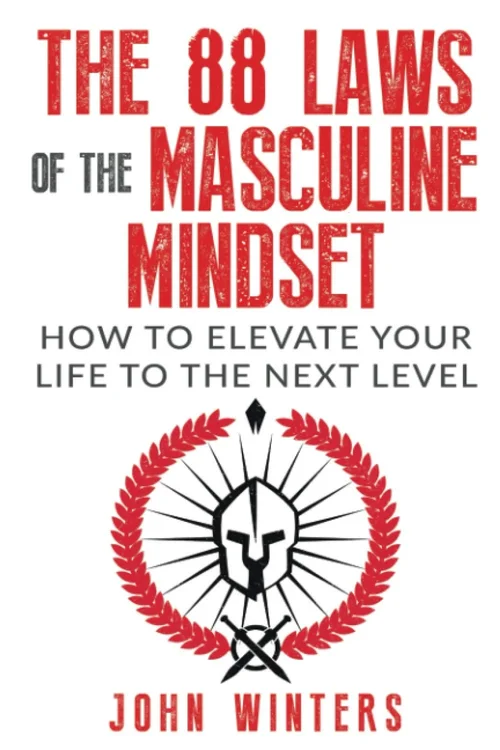
— John Winters, The 88 Laws of The Masculine Mindset
I used to think I was a free thinker because I disagreed with mainstream media. Took me years to realize I'd just swapped one herd for another. I went from following CNN's narrative to following contrarian podcasters' narratives. Same pattern, different shepherd. That's not independent thinking — that's brand loyalty disguised as rebellion.
The real test isn't whether you disagree with popular opinion. It's whether you can articulate why you believe what you believe without referencing someone else's argument. Try it right now with any strong opinion you hold. Strip away the influencer quotes, the podcast soundbites, the Twitter threads. What's left that's actually yours?
Often, not much.

Free Thinking for Men Starts With Auditing Your Inputs
A few months ago I did something that felt ridiculous at first. I wrote down every source of information I consumed in a single week. Podcasts, newsletters, social media accounts, conversations, books, news sites. Then I categorized them by whether they mostly confirmed my existing beliefs or challenged them.
The ratio was embarrassing. Roughly 85% confirmation, 15% challenge. And I'm someone who writes about mental independence for a living. Okay, that's a humbling admission — but it's honest.
This matters because of what psychologists call the confirmation bias — our tendency to seek out information that supports what we already believe. A 2009 study by Nickerson in Review of General Psychology showed this isn't just a mild preference; it fundamentally distorts how we process evidence. We don't just favor confirming data — we literally process disconfirming data more slowly and skeptically.
So if you want to actually think for yourself, the first move isn't philosophical. It's logistical. You need to change your information diet.
Three concrete steps that worked for me:
- Kill the echo chamber. Follow three people you genuinely disagree with. Not rage-bait accounts — thoughtful people with opposing views. Read them without composing rebuttals in your head.
- Institute a 48-hour opinion delay. When a major news story breaks or someone presents you with a hot take, don't form an opinion for two days. Let the dust settle. You'll be stunned how often your first reaction was wrong.
- Read primary sources. When someone cites a study, find the actual paper. When someone quotes a philosopher, read the original text. The distance between what people claim a source says and what it actually says is often enormous.
That third one changed me more than anything. I once spent a week reading Stoic philosophy directly after years of consuming it through Instagram quote graphics. Marcus Aurelius in the original is nothing like the motivational poster version. He's darker, more conflicted, more human. The filtered version had robbed me of the actual insight.

The Difference Between Contrarianism and Independent Thinking
This is where a lot of men in the self-development space get it wrong, and I'll be direct — I got it wrong for years too.
Contrarianism feels like free thinking. It has the same texture. You're going against the grain, saying things others won't say, positioning yourself outside the mainstream. But reflexive disagreement is just as mindless as reflexive agreement. You're still letting the crowd determine your position — you're just inverting it.
| Contrarian Thinking | Genuine Independent Thinking |
|---|---|
| Automatically opposes popular opinion | Evaluates each claim on its own evidence |
| Identity built around being "different" | Comfortable agreeing with the majority when warranted |
| Sources chosen to confirm alternative narrative | Sources chosen for credibility regardless of conclusion |
| Mistakes disagreement for intelligence | Understands that agreement can also require courage |
A genuine free thinker sometimes lands exactly where everyone else does. The difference is the process, not the destination. If your position on every single issue happens to oppose the mainstream, that's statistically suspicious. The crowd isn't wrong about everything. They're wrong about a lot — but not everything.
"If you don't know about something then find out or just don't comment on it until you know something about it. Thinking freely is the ethical way to go through reality on this planet."
— John Winters, The 88 Laws of The Masculine Mindset
That last part — the ethical dimension — is what most discussions about independent thinking miss entirely. Winters frames it as an ethical obligation, not just a personal advantage. And I think he's right. When you repeat unexamined ideas, you're not just limiting yourself. You're adding noise to the world. You're making it harder for everyone else to find signal.

The Social Cost Nobody Talks About
I lost a close friend in 2021 because I started thinking independently about a topic our entire social circle had consensus on. I won't get into specifics — the topic doesn't matter. What matters is that the moment I expressed a nuanced position that didn't align perfectly with the group, the response wasn't curiosity. It was hostility.
This is the part of mental independence that the motivational crowd conveniently glosses over. Thinking for yourself has real social consequences. Humans are tribal animals. A 2014 study published in Cognitive Neuroscience showed that social exclusion activates the same neural pathways as physical pain. When your tribe rejects you for your ideas, your brain processes it as a threat to survival. That's not weakness — it's biology.
So when I say free thinking for men requires courage, I'm not being dramatic. I mean it literally activates your threat response and you have to push through it anyway.
Winters writes about this in the context of what he calls "the opinions of sheep" — and while that language is more aggressive than I'd use (okay, sometimes I'd use it), the underlying point is sound. When you start executing on your own vision, the resistance doesn't come from your enemies. It comes from the people closest to you who are uncomfortable with your change.
My friend who stopped talking to me? He came back around eight months later. Said he'd thought about what I'd said and — while he still disagreed — realized he'd reacted to the act of disagreement rather than the substance. That conversation was more valuable than a hundred where we'd just nodded at each other.
Building an Independent Thinking Mindset — Without Becoming Insufferable
There's a trap here I want to name directly, because I've fallen into it. The guy who "thinks for himself" and won't shut up about it. The guy who turns every dinner party into a Socratic seminar nobody asked for. The guy who confuses having an opinion with having a personality.
Don't be that guy.
Real mental independence is quieter than its reputation suggests. It's less about broadcasting your unique views and more about the internal discipline of questioning your own assumptions before you question anyone else's. The Socratic method — which Winters references in The 88 Laws of The Masculine Mindset — was originally a tool for self-examination, not for winning arguments at bars.
The most independently-minded people I know share a few traits that surprised me:
They change their minds publicly. Not as a performance, but because they genuinely update their beliefs when they encounter better evidence. I used to think cold exposure was mostly placebo. Then I read Susanna Søberg's research on brown fat activation and deliberate cold exposure from the University of Copenhagen. Changed my position. Said so out loud. The world didn't end.
They hold ideas loosely. There's a difference between conviction and rigidity. A man with an independent thinking mindset holds his beliefs firmly enough to act on them but loosely enough to revise them. Think of it like gripping a bird — tight enough it doesn't fly away, loose enough you don't crush it.
They're comfortable with "I don't know." This one is harder than it sounds, especially for men. We're socialized to have answers. But "I haven't looked into that enough to have a position" is one of the most intellectually honest — and rare — sentences you'll hear from anyone.
"The only true wisdom is in knowing you know nothing."
— Socrates, as cited in The 88 Laws of The Masculine Mindset
Stop Following the Crowd by Getting Specific
Abstract commitments to "think independently" are worthless. You need to get specific. Pick one domain of your life where you've been running on borrowed conclusions and do the actual work.
Maybe it's your fitness approach. You've been following some influencer's program without understanding the principles behind it. Go read the actual exercise science. Schoenfeld's 2016 meta-analysis on training volume and hypertrophy might contradict half of what your favorite YouTuber claims.
Maybe it's your financial strategy. You've been dollar-cost averaging into index funds because everyone says to, without understanding why that strategy works or when it doesn't. Go read about sequence-of-returns risk. Understand the actual mechanics.
Maybe it's your personal code of conduct. You've inherited values from your family, your culture, your peer group — but you've never sat down and deliberately chosen which ones you actually endorse after examination.
| Following the Herd | Thinking for Yourself |
|---|---|
| "Everyone says real estate is the best investment" | "I've studied the data for my specific market and timeline" |
| "This diet worked for that influencer" | "I understand the metabolic principles and how they apply to my body" |
| "My friend group all believes X" | "I've examined the evidence and reached my own conclusion, which may or may not align" |
The specificity matters because free thinking for men isn't a general attitude you adopt. It's a practice you apply to concrete decisions. Every day, in specific moments, with specific information.
I still catch myself defaulting to borrowed thinking at least once a week. Last Thursday I realized I'd been repeating someone else's take on AI regulation as if I'd thought it through myself. I hadn't. I'd absorbed it from a podcast during a morning run and filed it under "my position." Had to sit down that evening and actually work through what I thought. Turns out my real position was more nuanced — and less confident — than the one I'd been parroting.
That's the practice. Not a one-time revelation. A recurring discipline of catching yourself mid-autopilot and choosing to engage System 2 instead.
The man who thinks for himself isn't the loudest one in the room. He's the one who pauses a beat longer before speaking — not because he's slow, but because he's actually processing instead of retrieving someone else's cached response.
Frequently Asked Questions
Isn't "thinking for yourself" just an excuse to ignore expert advice?
No — and this is a common misunderstanding. Independent thinking means evaluating expert advice critically, not dismissing it. A doctor who spent twelve years studying medicine knows more about your health than a Reddit thread. Free thinking means understanding why the expert recommends what they do, not just blindly rejecting authority.
How do I know if I'm actually thinking independently or just being contrarian?
Simple test: can you name three mainstream positions you agree with after genuine examination? If every single one of your views opposes consensus, you're probably reacting rather than reasoning. Real independent thinkers land with the majority sometimes.
Does free thinking make you harder to get along with?
It can, temporarily. People get uncomfortable when you stop nodding along. But in my experience, the relationships that survive your independent thinking become far deeper and more honest. The ones that don't were built on conformity, not connection.
What's the fastest way to start thinking more independently?
Start with the 48-hour opinion delay I mentioned above. Next time a hot topic comes up, resist the urge to immediately take a side. Give yourself two days to read multiple perspectives before forming a position. You'll be surprised how often your snap judgment was just tribal signaling.
Can introverts be free thinkers more easily than extroverts?
Introverts might have a slight structural advantage because they spend more time in internal processing. But extroverts have the advantage of testing ideas through conversation. Neither personality type has a monopoly on independent thought — it's a skill, not a trait.