James Clear and the Quiet Power of Atomic Habits

James Clear habits are not really about discipline; they are about architecture, and that is the uncomfortable truth many ambitious people resist. Clear’s central claim is almost insulting to the ego: your outcomes are less a heroic expression of willpower than the visible consequence of systems you repeat. For entrepreneurs, artists, and leaders who prefer grand declarations, that can feel small. It is not small. It is the workshop where identity becomes behavior.
TL;DR: James Clear is an American author and speaker best known for Atomic Habits, his 2018 book on behavior change. He matters because he translated habit formation into a clear practical system built around small actions, identity, environment, and feedback. Readers often misunderstand him as a “productivity hacks” writer, but his deeper contribution is a philosophy of incremental self-design. Keep reading if you want to understand James Clear habits beyond the slogans.
Who is James Clear, really?
James Clear is a writer, speaker, and habit formation thinker best known for Atomic Habits. His work focuses on how small behavioral changes compound into meaningful life and business outcomes. He became widely known through his newsletter, essays, and the global success of his 2018 book.
Clear did not arrive as a cloistered academic philosopher or a laboratory psychologist. He emerged as a public writer: someone standing at the crossroads of research synthesis, personal experimentation, and practical communication. Clear’s public-writer position matters because his influence comes less from inventing behavioral science than from making it usable.
Atomic Habits, published by Avery in 2018, became a major bestseller and has been translated into many languages. The book draws on ideas from psychology, neuroscience, sports training, and decision design. Clear’s gift is compression. He takes complicated material and builds tools ordinary people can actually remember on a Tuesday afternoon.
His public biography also includes a formative injury. Clear has written about being struck in the face by a baseball bat during high school, suffering serious injuries, and rebuilding through slow, consistent improvement. The story is not the whole explanation for his work, but it gives texture to his obsession with compounding progress.
The deeper James Clear story is not “man discovers habits.” It is “writer creates a practical grammar for human change.” In a culture addicted to transformation theater, Clear asks a less glamorous question: what action will you repeat after motivation has left the room?
Why do James Clear habits matter today?
James Clear habits matter because modern life is built to fracture attention and reward inconsistency. Clear offers a practical framework for making desired behavior easier and unwanted behavior harder. His work remains relevant because it connects personal change to systems rather than mood.
We live inside a commercial weather system engineered to pull the mind apart. Notifications, feeds, apps, messages, and outrage cycles do not merely distract us. They train us. They create loops of cue, craving, response, and reward before most people have even named what is happening.
Clear’s importance is that he gives readers a way to intervene in those loops. He does not merely say, “Try harder.” He says, in effect, redesign the room, the ritual, the cue, the friction, the reward, and the story you tell yourself about who you are becoming.
That is why James Clear habits resonate with founders, creators, athletes, executives, and students. The method scales down to a glass of water and up to a company culture. A team, after all, is a bundle of repeated behaviors given a logo and a payroll system.
In entrepreneurial language, Clear makes behavior operational. He turns aspiration into process design. He moves the conversation from “What do I want?” to “What environment would make the right action nearly inevitable?”
This is also where his work intersects with a theme I return to often: the invisible infrastructure beneath visible achievement. I have written about this in relation to the invisible labor founders perform before results appear. Clear’s system is another version of that same truth. The unseen repetitions become the public artifact.
What is James Clear best known for?
James Clear is best known for Atomic Habits. The book explains how tiny behavioral changes can compound into major outcomes over time. Its most famous ideas include the Four Laws of Behavior Change, identity-based habits, habit stacking, and environment design.
The title itself is doing conceptual work. “Atomic” means both tiny and powerful. Clear argues that small habits are not trivial because repeated actions accumulate. A one percent improvement does not feel theatrical, but compounded over time, it changes the shape of a life.
One of Clear’s most quoted lines captures the engine of the book: “You do not rise to the level of your goals. You fall to the level of your systems.” The sentence matters because it dethrones the fantasy of desire. Goals point. Systems carry.
That distinction is the spine of Atomic Habits. Goals are outcomes you want. Systems are processes you follow. A writer may want a finished manuscript, but the system is the recurring time, place, cue, and expectation that produces pages.
Clear’s work also stands out because it treats identity as behavioral evidence. He writes, “Every action you take is a vote for the type of person you wish to become.” That line has traveled far because it reframes change as a democratic accumulation of small proofs.
The person who goes to the gym once has not become an athlete in any grand sense. But the action casts a vote. The person who writes for twenty minutes has not become a master artist. But the vote has been counted.
Clear is not saying identity is imaginary. He is saying identity is reinforced through repetition. We become credible to ourselves by observing what we repeatedly do.
What are the core ideas in Atomic Habits?
The core ideas in Atomic Habits are the Four Laws of Behavior Change, identity-based habits, habit stacking, and environment design. Clear presents habits as a cycle of cue, craving, response, and reward. His method teaches readers to alter that cycle deliberately.
The Four Laws of Behavior Change are Clear’s most practical framework. To build a good habit, he says, make it obvious, attractive, easy, and satisfying. To break a bad habit, invert the laws: make it invisible, unattractive, difficult, and unsatisfying.
| Idea | What James Clear Means | Common Misreading |
|---|---|---|
| Make it obvious | Design clear cues that trigger the desired behavior. | Assuming motivation will remind you. |
| Make it attractive | Pair the habit with appeal, desire, or social reinforcement. | Thinking discipline must feel miserable. |
| Make it easy | Reduce friction so starting becomes simple. | Confusing difficulty with seriousness. |
| Make it satisfying | Create immediate feedback that rewards repetition. | Waiting too long to feel progress. |
These laws work because they respect human nature instead of insulting it. Many people build self-improvement plans as if they are machines without fatigue, emotion, or context. Clear builds from the more honest premise that behavior follows the path of least resistance more often than the path of noble intention.
Identity-based habits
Identity-based habits begin with the person you want to become. Clear contrasts this with outcome-based habits, which begin with what you want to achieve. The identity approach asks: what would this kind of person do repeatedly?
This is one of Clear’s most philosophically charged ideas. He takes habit change out of the realm of mere scheduling and places it inside selfhood. A person does not simply “run.” Over time, through repeated action, a person begins to say, with evidence, “I am a runner.”
For business leaders, the same principle applies. A company does not become innovative because it prints the word on a slide deck. It becomes innovative when its people repeatedly protect experimentation, tolerate intelligent failure, and reward useful dissent.
Habit stacking
Habit stacking means attaching a new behavior to an existing routine. Clear popularized the formula: after I do current habit, I will do new habit. The method works because it uses an established cue rather than requiring a new one from scratch.
For example, after pouring morning coffee, a founder might review the one decisive task of the day. After closing a laptop, a writer might place tomorrow’s notebook on the desk. These are small acts, but they remove negotiation from the beginning of the next cycle.
Habit stacking is not magic. It is behavioral choreography. The old movement creates the stage for the new movement.
Environment design
Environment design means shaping physical and digital surroundings to support desired behavior. Clear argues that cues in the environment often drive action more reliably than intention. Changing what is visible, available, and easy can change what gets repeated.
This is where James Clear habits become especially useful for creative entrepreneurs. The studio, dashboard, calendar, inbox, browser, and phone are not neutral tools. They are behavioral landscapes. They either invite the work or bury it under a thousand small doors.
If your phone sleeps beside your bed, your morning belongs to whoever paid to reach you. If your notebook sits open on your desk, the blank page has a fighting chance. This is not moralism. It is architecture.
What did James Clear actually contribute?
James Clear’s main contribution is not the invention of habit science. His contribution is the clear organization, naming, and popularization of behavior-change principles for everyday use. He made habit formation legible to a broad audience without requiring readers to become specialists.
Many of the ideas behind Atomic Habits have roots in earlier research. Behavioral psychologist B.F. Skinner’s work on reinforcement, Charles Duhigg’s The Power of Habit, behavior scientist BJ Fogg’s behavior model, and decades of cognitive and behavioral psychology all form part of the intellectual landscape. Clear’s achievement is synthesis with unusual clarity.
That kind of contribution should not be dismissed. In the economy of ideas, translation is often as powerful as discovery. The person who builds the bridge changes the territory for everyone who crosses it.
Clear’s writing style is direct, modular, and memorable. He uses stories, diagrams, laws, summaries, and practical examples. The result is a book that can function as a manual rather than merely an argument.
He also helped shift popular productivity culture away from brute force intensity. Older productivity rhetoric often worshiped long hours, extreme discipline, and domination of the schedule. Clear’s method is quieter. It asks what can be repeated sustainably.
That shift is significant. A habit is not a heroic burst. It is a recurring vote. In a world where people burn themselves into symbolic ashes and call it ambition, Clear’s contribution has a humane edge.
What do most people misunderstand about James Clear habits?
Many people misunderstand James Clear habits as tiny hacks for quick success. Clear’s actual argument is slower and more demanding. He says small behaviors matter because they compound through repetition, not because they create instant transformation.
The shallow reading of Clear turns Atomic Habits into a bag of tricks: put your shoes by the door, track your streak, drink more water, wake up earlier. Those tactics can help. But they are not the center of the philosophy.
The center is system integrity. Clear’s work asks whether your daily structures make your desired identity believable. If they do not, your ambition becomes theater. You perform seriousness while your environment keeps voting against you.
Another misunderstanding is that Clear is anti-goal. He is not. He argues that goals are useful for setting direction but insufficient for producing progress. The problem is not having goals. The problem is worshiping goals while neglecting the machinery that could make them real.
A third misconception is that “small” means “easy forever.” Small habits are easy to begin, but the long arc requires honesty. You still have to return. You still have to adjust. You still have to survive boredom, missed days, and the weird emotional resistance that appears when a new identity starts threatening the old one.
Clear acknowledges this in his emphasis on consistency rather than perfection. Missing once is an accident. Missing twice can become a new habit. The practical wisdom is plain: do not let a lapse become a lifestyle.
Is James Clear a productivity writer or a philosopher of behavior?
James Clear is commonly labeled a productivity writer, but his best work reaches into behavioral philosophy. He studies how repeated actions shape identity, outcomes, and self-trust. His practical advice rests on a deeper view of human beings as creatures formed by systems and evidence.
I read Clear less as a calendar mechanic and more as a philosopher of compounding identity. He is not asking us to squeeze more tasks into the day. He is asking us to notice that the day is already sculpting us.
The difference between productivity-as-storage and behavior-as-identity changes the question. Productivity culture often treats time as a warehouse. Clear treats behavior as a vote. One worldview asks, “How much can I store?” The other asks, “What am I becoming through repetition?”
For creative entrepreneurs, this is not ornamental philosophy. It is operating strategy. A founder becomes the kind of person who can handle pressure by repeatedly acting with clarity under pressure. An artist becomes the kind of artist who finishes work by repeatedly finishing small units of work.
There is an ethical dimension here, too. If environment shapes behavior, then leaders are responsible for the environments they create. A company that rewards panic should not be surprised when panic becomes culture. A studio that rewards shallow trend-chasing should not mourn the disappearance of original work.
Clear’s ideas also connect with strategic restraint as an entrepreneurial edge. The strongest builders do not merely add more habits, tools, and commitments. They remove the cues that keep summoning lesser versions of themselves.
How should entrepreneurs apply James Clear habits?
Entrepreneurs can apply James Clear habits by designing systems for repeated high-value behavior. The goal is to reduce reliance on motivation and increase the probability of useful action. The best applications involve environment, decision rules, team rituals, and feedback loops.
Entrepreneurship seduces people into dramatic thinking. Launches, pivots, funding rounds, personal brands, and public wins create a theater of motion. But most businesses are built in the unphotographed repetitions: follow-ups, product refinements, customer conversations, hiring decisions, cash discipline, and careful positioning.
Clear’s system helps entrepreneurs convert ambition into repeatable operating habits. The question is not “How do I feel inspired?” The better question is “What behavior must happen every week for this business to become more real?”
Use habits to protect the essential work
Founders should identify the few behaviors that produce disproportionate value. These might include speaking with customers, reviewing cash flow, shipping product improvements, writing strategic memos, or building distribution. Then the founder should make those behaviors obvious, scheduled, and protected.
A vague intention to “do more sales” is weak. A standing Tuesday and Thursday block for ten direct customer conversations is stronger. The difference is not charisma. The difference is structure.
Design friction deliberately
Clear’s inversion of habit laws is especially useful for business. If a behavior is damaging, make it harder. Remove app shortcuts. Delay reactive meetings. Require written briefs before decisions. Put speed bumps in front of impulses that have been masquerading as leadership.
Many teams do the opposite. They make shallow work effortless and deep work ceremonial. They make interruption instant and concentration rare. Then they wonder why the company feels busy but thin.
Make progress visible
Habits survive when feedback is close enough to be felt. Entrepreneurs should create visible measures for the behaviors they want repeated. This does not mean drowning the company in metrics. It means selecting a few signals that connect effort to learning.
A creative business might track published essays, qualified conversations, prototype tests, or repeat buyers. The point is to let the system see itself. A habit without feedback becomes a private superstition.

What can writers and artists learn from James Clear?
Writers and artists can learn from James Clear that creative output depends on repeatable conditions. Talent matters, but habits determine whether talent returns to the page, studio, or stage. Clear’s methods help creators reduce friction around starting and finishing.
Creative people often protect a romantic myth of spontaneity. I understand the myth. Art does need surprise. But surprise requires a place to arrive. The muse, if we insist on using that old word, is more likely to visit a working studio than a permanently postponed dream.
Clear’s habit stacking can be powerful for writers. After making tea, open the manuscript. After reading yesterday’s final paragraph, write one rough sentence. After finishing a session, leave a note about where to begin tomorrow.
These acts are humble, almost embarrassingly ordinary. Yet creative empires are often built from ordinary gates. The page does not care how profound your intention sounded in your head. It asks whether you arrived.
Environment design is equally important. A painter who leaves brushes cleaned and visible has reduced the ceremony of beginning. A musician who keeps an instrument within reach has placed a cue inside the room. A writer who blocks the internet before drafting has admitted the truth about temptation.
Clear also helps artists separate identity from mood. You do not need to feel like a serious writer before writing. Writing is one way the identity becomes credible. The vote precedes the certainty.
Where does James Clear fit among habit and productivity thinkers?
James Clear fits within a broader tradition of habit, behavior, and productivity writing. His work is often compared with Charles Duhigg, BJ Fogg, Cal Newport, and Stephen Covey. Clear’s distinctive strength is his simple, memorable system for applying habit science to daily life.
Charles Duhigg’s The Power of Habit, published in 2012, helped popularize the habit loop of cue, routine, and reward. BJ Fogg’s Tiny Habits and behavior model emphasize that behavior happens when motivation, ability, and prompt converge. Cal Newport’s work on deep work focuses more intensely on attention and knowledge labor.
Clear belongs in conversation with Charles Duhigg, BJ Fogg, Cal Newport, and Stephen Covey. He is less corporate than Covey, less journalistic than Duhigg, less academically model-driven than Fogg, and less attention-specialized than Newport. His lane is practical synthesis.
That synthesis explains the reach of James Clear habits. They are concrete enough for beginners, but not so simplistic that advanced readers must abandon them. A CEO and a college student can both use the Four Laws, even if the stakes differ.
The limitation is also worth naming. Atomic Habits is not a full theory of trauma, poverty, institutional constraint, addiction, or social power. It is a powerful framework for behavior design, but not a universal solvent. Serious readers should use it without pretending it explains every human struggle.
That nuance makes Clear more useful, not less. A tool becomes stronger when we know its proper scale.
What are the best James Clear quotes to understand his work?
The best James Clear quotes reveal his focus on systems, identity, and compounding behavior. His most useful lines are not decorative motivation. They clarify how repeated actions shape results over time.
The first quote to know is from Atomic Habits: “You do not rise to the level of your goals. You fall to the level of your systems.” This sentence is the book’s operating principle. It tells readers to stop treating goals as engines. Goals are steering mechanisms; systems are engines.
The second essential quote is: “Every action you take is a vote for the type of person you wish to become.” This line explains identity-based habits in one sentence. It turns behavior into evidence.
A third often-cited line is: “Habits are the compound interest of self-improvement.” Clear uses the financial metaphor to show why small actions can seem insignificant in the moment but become consequential over time. The metaphor works because compounding is quiet before it becomes undeniable.
These quotes have become popular because they are portable. But portability can flatten meaning. Clear is not saying a quote will change your life. He is saying your repeated behaviors will.
What should modern readers be careful about when using James Clear habits?
Modern readers should avoid turning James Clear habits into self-blame. Clear’s framework is useful, but behavior is also shaped by health, money, culture, work demands, and social context. A mature reading uses habit design without pretending every obstacle is personal failure.
This point needs more daylight. The self-improvement market sometimes converts every difficulty into a character indictment. If you are exhausted, redesign your habits. If you are poor, redesign your habits. If your workplace is chaotic, redesign your habits. There is truth in agency, but there is danger in reducing everything to agency.
Clear’s work is strongest when used as a lever, not a verdict. It can help you ask better questions about cues, friction, and identity. It should not be used to shame someone whose circumstances are genuinely unstable or constrained.
There is also the danger of optimization obsession. A person can spend more time designing the perfect habit system than doing the work. Trackers, templates, journals, apps, and rituals can become a decorative bureaucracy around avoidance.
The remedy is simple and difficult: keep the system close to the behavior. If the habit is writing, write. If the habit is training, train. If the habit is selling, make the call. Design should serve contact with reality.
Another caution is identity rigidity. Identity-based habits are powerful, but identities can become cages if held too tightly. “I am a disciplined person” can support growth. It can also become brittle perfectionism if a missed day feels like exile from the self.
Clear’s own emphasis on small votes helps soften that danger. One vote does not decide the election. Return to the booth.

How do James Clear habits connect with my own work?
James Clear habits connect with my work through the idea that identity is built through repeated choices. My perspective is more philosophical and masculine-coded, but the overlap is practical. Both approaches treat self-command as something proven by behavior rather than announced by intention.
I read Clear as an architect of behavioral credibility. That phrase matters to me because I have little patience for ornamental ambition. In art, business, and personal conduct, a person eventually becomes legible through patterns. The room can hear what the mouth tries to hide.
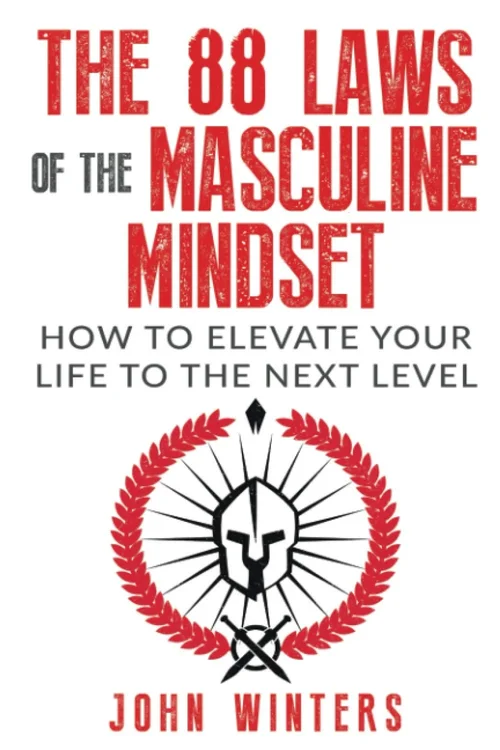
In my own book, The 88 Laws Of The Masculine Mindset, I examine the inner laws, restraints, and standards that shape a man’s orientation toward life. If Clear gives readers the mechanics of habit formation, my work explores the harder interior posture that determines which habits a person is willing to honor when no audience is present.
That is the earned bridge between the two. Clear helps readers build the system. My angle presses into the governing mind behind the system: the standards, refusals, and private codes that decide whether the system survives pressure.
I do not think every reader needs a harsher voice in the room. Some need gentleness. Some need rest. Some need fewer inputs and fewer borrowed ambitions. But some readers need to recover seriousness, and Clear’s work can be a precise entry point into that recovery.
Where should you start with James Clear?
The best place to start with James Clear is Atomic Habits. The book is clear, practical, and comprehensive enough for most readers. His essays and newsletter are useful follow-ups for applying the ideas in shorter forms.
If you are new to Clear, read Atomic Habits slowly enough to implement one idea per chapter. Do not binge it as motivational entertainment. The book is most useful when treated like a manual, not a sermon.
A strong starting path looks like this:
- Begin with the Four Laws. Identify one habit to make obvious, attractive, easy, and satisfying.
- Choose one identity. Decide the kind of person one repeated action would support.
- Redesign one environment. Change the room, device, calendar, or cue before demanding more willpower.
- Track one behavior. Make progress visible without turning life into a spreadsheet prison.
- Review after two weeks. Adjust the system based on reality, not fantasy.
For entrepreneurs, I would add one more step: apply Clear’s thinking to the company, not only the individual. What does the organization make obvious? What does it reward? What does it make easy? What behaviors become inevitable because of the system?
This question also belongs in markets. In an oversaturated economy, attention is shaped by repeated signals. I explored this from another angle in radical curation in an oversaturated market. Clear’s habits lens helps explain why curation itself must become a repeated discipline, not a one-time brand exercise.
FAQ about James Clear
What is James Clear best known for?
James Clear is best known for Atomic Habits, his 2018 book about building good habits and breaking bad ones. The book popularized the Four Laws of Behavior Change and identity-based habits.
What are the Four Laws of Behavior Change?
The Four Laws are: make it obvious, make it attractive, make it easy, and make it satisfying. Clear uses them to explain how to build good habits. The inverse laws help break bad habits.
What does James Clear mean by identity-based habits?
Identity-based habits start with the kind of person you want to become. Instead of focusing only on outcomes, you repeat actions that provide evidence for a desired identity. Clear summarizes this as casting votes for the person you wish to become.
Is Atomic Habits worth reading?
Yes, Atomic Habits is worth reading if you want a practical system for behavior change. It is especially useful for readers who struggle with consistency, environment design, or turning goals into daily action.
Are James Clear habits only for productivity?
No. James Clear habits apply to health, creativity, leadership, relationships, and business. The framework is about repeated behavior, not merely getting more tasks done.
What is James Clear’s lasting lesson?
James Clear’s lasting lesson is that behavior compounds into identity and results. His work teaches readers to build systems that make desired actions easier to repeat. The real value of his method appears over time, not in a single burst of motivation.
Clear matters because he respects the small hinge. He understands that a life rarely changes through one grand speech to the self. It changes through repeated contact with a better cue, a cleaner environment, a smaller start, a visible reward, and an identity slowly made believable.
For the modern reader, the challenge is to avoid turning Atomic Habits into another object of consumption. Do not merely admire the elegance of the framework. Put one piece of it under pressure. Choose one behavior. Remove one friction point. Protect one ritual long enough for it to tell the truth.
If Clear’s work speaks to you because you are trying to build a stronger inner operating system, you may also appreciate my book, The 88 Laws Of The Masculine Mindset. Read Clear for the mechanics of repeated action. Read my work for a related exploration of standards, restraint, and the private code behind disciplined living.