What Radical Curation Does to an Oversaturated Market

Radical curation is not a marketing tactic; it is an admission that the oversaturated market has broken something fundamental in how we create and consume. Most entrepreneurs treat invisibility as a volume problem. More posts. More assets. More frequency, until the feed itself chokes on their diligence. I bought the lie for years. I treated my blog like a printing press that would rust if it paused, terrified that silence meant death. But silence, properly engineered, is louder than noise. In a system designed to reward endless production, the act of refusing to produce is the only remaining edge. The market drowns in decent work every hour. It needs fewer things that matter more.
The Night Someone Taped Over the Paintings
The warehouse smelled like wet plaster and the ghost of cheap Merlot. It was October, unseasonably warm, and I watched a gallerist—someone who understood attention better than most product managers I've met—walk through her own opening with a roll of brown packing tape and a stack of old bedsheets. She wasn't hanging work. She was covering it. A photographer's entire series on urban decay, hidden behind muslin. An installation of suspended glass, draped in tarps. A wall of charcoal portraits, each one sheeted like furniture in an abandoned house. By midnight, she'd obscured seventy percent of the room. The remaining thirty percent pulsed in the empty space like a toothache. People stopped walking past. They stood still. They argued about what was missing.
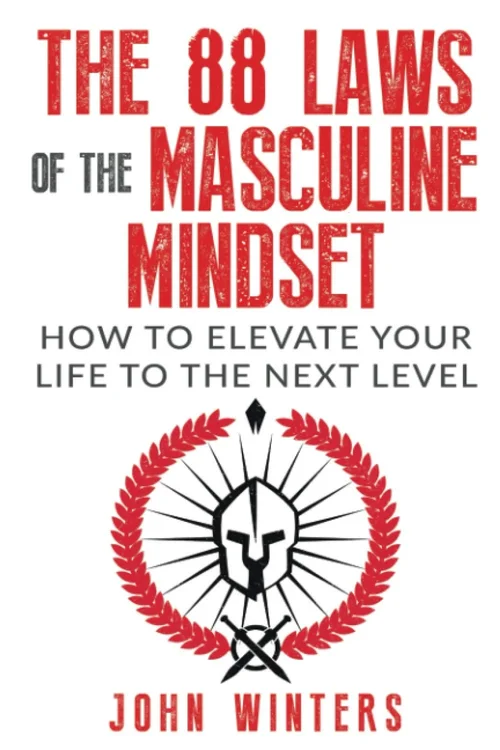
"This book can also be used as a reminder and you can re-read it every week to reload the most important mindset and personal development principles back into your mind."
— John Winters, The 88 Laws Of The Masculine Mindset
I didn't understand what I was seeing until years later, when I was drowning in my own output. I'd built a blog that updated daily, sometimes twice, a frantic pulse of commentary and advice that felt necessary but never quite landed. The gallerist wasn't destroying art. She was curating it violently—asserting that meaning doesn't accumulate through addition but through the deliberate construction of absence. Most digital creators act like hoarders, stacking content into every available corner because empty space feels like failure. They treat their platforms as storage units rather than galleries. And the result is exactly what you'd expect: a room so full that nothing can breathe.
The analogy limps a little when you apply it to business, because a business needs revenue, not just contemplation. But that's the trap. We assume that more content equals more pipeline, more reach, more authority. It's a reasonable assumption. It's also dead wrong. The creators who dominate an oversaturated market aren't the ones who shout the loudest. They're the ones who create enough silence around their work that you can hear the specific frequency of their voice. That requires something most entrepreneurs find physically uncomfortable: the systematic elimination of your own mediocre output. Not polishing it. Not rescheduling it. Killing it.
I remember the first time I tried this. I spent an afternoon deleting posts that had taken me collective weeks to write. My finger hovered over the confirm button like it was wired to a shock collar. Each deletion felt like erasing evidence of my own effort. But effort isn't value. That's a hard distinction to internalize when you've been raised on the Protestant work ethic of the content economy. More is better. Hustle is holy. Except it isn't. Not anymore. The market shifted while we were busy scheduling our ninth weekly carousel.
The bedsheets were ugly, by the way. Not the elegant white kind you see in films, but the stained, practical kind that smelled like dust and someone's old basement. That made it better. This wasn't a performance of minimalism. It was an act of violence against the expectation that more is more. I keep that image with me now when I write. I ask myself: is this sentence pulling its weight, or is it just another sheet waiting to be taped over? Most of them are sheets. Most of them deserve the tape. And the tape is—

Radical Curation and the Economics of an Empty Feed
Radical curation works in digital markets the way scarcity works in physical ones—it forces evaluation where there was only consumption. Traditional content curation asks: what can I add to the conversation? It aggregates, summarizes, shares. It's useful, but it's still additive. Radical curation asks the opposite question: what can I remove so that what remains becomes inevitable? It is subtractive, aggressive, and economically irrational in the short term. That irrationality is exactly what makes it effective.
I used to think that the uncertainty inherent in creative entrepreneurship demanded constant proof of life. A daily post was a heartbeat, a signal that the organism hadn't died. But proof of life is not the same as proof of value. When everything is available, availability itself depreciates. The feed becomes a landfill where even good work goes to decompose under the weight of newer, shinier refuse. The creators who break through this are not necessarily more talented. They're more selective. They manufacture scarcity in a system designed for infinite abundance.
There's a practical mechanics to this that no one talks about because it doesn't sell software. You don't need another scheduling tool. You need a killing hand. Start by auditing your last thirty posts. Not your best thirty—your last thirty. Ask whether each one moved a single reader to do something they wouldn't have done otherwise. Not "liked." Not "saved." Something. If the answer is no, archive it. Yes, delete it. The platforms will panic. Your ego will scream. Do it anyway. Then establish a ratio: for every piece you publish, five should die in the editing room. Not because they're bad, but because they're merely good. Good is the enemy of unavoidable.
A ceramicist I corresponded with recently stripped her Instagram down to forty-seven posts. She deleted years of decent work. Her engagement didn't drop. It concentrated. The remaining images carried the weight of everything absent behind them. Her DMs shifted from "nice work" to "I need this." That's the shift from content to artifact. From noise to signal. And it's not mystical—it's the basic physics of attention. When you reduce the surface area, you increase the pressure. It's why a needle breaks skin when a palm doesn't.
But here's where it gets uncomfortable. Or — actually, that's not quite right. Here's where it gets specific. Radical curation requires you to know the difference between your voice and your echo. Most creators are running on echo. They see a format work, so they replicate it. They see a topic trend, so they add their spin. This isn't creation; it's ventilation. You're letting the pressure of the market escape through your mouth. Selective creation means refusing to vent, even when it hurts. It means sitting on an idea for three weeks because the timing isn't right, or because you haven't found the specific angle that makes it yours. Selective creation is how you build creative authority in a market that hands out participation trophies for showing up. The market hates this. The market wants speed. Your audience, the real one, wants recognition. They want to feel that you made this for them, not for the feed.
This is where philosophical rigor in creative work becomes non-negotiable. You can't curate radically if you don't know what you actually believe. The absence has to mean something specific. If you simply post less without tightening the ideological framework, you're not curating. You're lazy. The void has to be shaped. It needs edges. Sharp ones.
The business model shifts when you adopt this. You stop selling volume. You stop measuring yourself by output metrics that were designed to addict you to the platform. Instead, you optimize for gravitational pull. One piece that pulls fifty ideal clients is more valuable than fifty pieces that pull one random viewer each. It's a different math. Most people are too scared to do it because the graph goes flat for a while before it bends upward. That flatline is the toll. You pay it in advance.
The platforms know this, by the way. They're not neutral. They have a vested interest in your volume because volume creates inventory. Your post is their real estate. Every time you publish something merely good, you're signing over another square foot of your intellectual property to a landlord who charges no rent but extracts all the value. Radical curation is, in this sense, a kind of reclamation. You're taking the land back. You're saying no, this acreage stays empty until I decide what belongs on it. That's not just artistic. It's entrepreneurial. It treats attention as property rather than charity.

The Ethics of What You Refuse to Show
| Saturated Market Default | Radical Curation |
|---|---|
| Flood the feed | Own the silence |
| Volume proves effort | Selectivity creates weight |
| Audience scrolls past | Audience feels the gap |
| Stay top of mind | Become impossible to ignore |
Every act of curation is also an act of exclusion, and exclusion in an oversaturated market carries a moral weight that most creators ignore. When you decide what enters the feed, you're not just editing your brand. You're deciding what deserves to occupy another person's finite minutes on earth. That sounds grandiose until you watch someone scroll through three hundred posts in a bathroom break, emerging with nothing but a mild headache and the sense that they've been robbed. I've contributed to that noise. (I also own three pairs of boots I never wear, which feels relevant, though I can't articulate exactly—) Radical curation doesn't solve the ethics. It at least forces you to sit with them.
And the long-term effect on users matters. Exposure to feeds where absence is intentional and every post carries the density of a finished thought does something to the nervous system. It lowers the ambient hum. I'm not a psychologist; I won't pretend otherwise. But I've watched readers slow down on sparse feeds. They remember names. In a marketplace engineered for panic, slowness is a strange kind of gift. The ethical dilemma is real: by curating radically, you're implicitly saying that most other content is waste. And you're right. But saying it out loud makes you a lot of enemies in the creator economy, where everyone is pretending their latest Reel is essential.
But If You Post Less, Won't the Algorithm Bury You?
You might think the platform gods demand daily sacrifice, and that reducing your output is digital suicide. That's partially true, but only if you're playing a game that was already rigged to turn you into a content serf. The platforms do reward frequency—up to a point. What they reward more, and what most creators miss because they're too busy producing to analyze, is engagement density. One post that stops the thumb and holds the eye for forty-five seconds is worth more than ten posts that get flicked past in three. The algorithm doesn't hate silence. It hates irrelevance. And nothing breeds irrelevance faster than exhausting your audience with volume.
I learned this by accident, or maybe by exhaustion. Two winters ago—no, three, time blurs—I stopped posting for six weeks. Not as a strategy. I simply had nothing worth saying. My analytics dipped, then stabilized, then surged when I returned with a single essay that I'd spent a month refining. The post outperformed my previous twenty combined. Was it the algorithm? Was it luck? Probably both. But the lesson stuck. Creative entrepreneurship outlives hustle culture precisely because it operates on different physics. It doesn't try to outwork the machine. It tries to break the machine's assumptions about what work looks like.
Starting radical curation on Instagram or TikTok isn't complicated, which is why most people avoid it. It lacks the dopamine hit of constant publication. First, stop posting for two weeks. Not "post less." Stop. Let the feed go quiet. Archive anything that doesn't pass a simple test: would you pay to promote this to a stranger? If not, it's gone. When you return, post half as often and twice as slow. Replace trending audio with your own voice. Replace daily stories with weekly dispatches that actually conclude an argument instead of trailing off into a poll sticker. The platforms won't congratulate you. Your peers might think you've failed. But your true audience—the ones who actually buy, who actually care—will feel the difference immediately. They'll have room to find you.
There's a risk, of course. You might fade. You might miscalculate and discover that your silence was indistinguishable from your absence. That happens. I've seen it. I've watched creators go quiet and return to crickets, not because they were bad, but because they were forgettable even when present. Radical curation doesn't fix mediocrity. It amplifies whatever is already there. If your work is thin, absence just reveals the echo. But if your work has weight, silence becomes a pedestal. The risk is real. The alternative—shouting into a typhoon of identical voices until your vocal cords give out—is not safety. It's just a slower form of disappearance.
What complicates this is the rise of AI-generated content, which makes the volume problem exponentially worse. In two years, the oversaturated market won't be saturated with human noise. It'll be saturated with infinite machine noise, perfectly optimized, endlessly produced. The only response that scales is the one the machine can't fake: deliberate, expensive absence. A human choice not to speak. That's the one thing artificial intelligence can't manufacture, because its entire existence is additive. It generates. You curate. And in a world of infinite generation, curation is the last truly human advantage.
The real counterargument isn't the algorithm. It's your own addiction to the pulse of production. The likes, the comments, the little green arrows pointing up. We say we're building businesses, but we're also feeding a habit. And habits don't like being cut in half. They like being fed. The question isn't whether the algorithm will punish you for posting less. The question is whether you can survive the withdrawal—and what you might find if you do—
Last week I opened a drawer looking for a charger and found a notebook from 2019 instead. Every page was full of content calendars, post ideas, growth hacks. The ink had faded slightly. I flipped through it and couldn't remember why a single entry had felt urgent. I left the notebook there, closed the drawer, and went back to a draft I was trying to cut in half. The charger could wait.
This article draws on ideas from The 88 Laws Of The Masculine Mindset.
Frequently Asked Questions
What is radical curation?
Radical curation is the practice of drastically reducing output to highlight only the most essential, high-impact work. Instead of competing through volume, it creates scarcity and forces audiences to confront the weight of what remains. This approach shifts focus from constant production to deliberate, intimidating quality.
How does radical curation help in an oversaturated market?
Radical curation helps you stand out by removing noise so your audience can focus entirely on your best work. In a flooded market, extreme selectivity signals confidence and creates a psychological premium around your offerings. It transforms your brand from just another voice into an unmissable signal.
Why does radical curation intimidate audiences?
Radical curation intimidates by making the remaining work feel heavy with intention and undeniable purpose. When you strip away everything safe or mediocre, what is left demands serious attention and respect. That selective pressure makes your audience feel the full gravity of every piece you present.
How do I start practicing radical curation today?
Start practicing radical curation by auditing your existing content or products and removing anything that does not absolutely captivate or convert. Commit to publishing or releasing only what meets an aggressively high standard, even if that means saying nothing for a while. Build a practice where silence and absence become as strategic as the work itself.