Why Creative Entrepreneurship Outlives Hustle Culture

The kettle hissed on the stove while I sorted through a drawer of mismatched brass keys and crumpled invoices. It was 2:14 a.m. The kind of quiet that presses against the windows.
I wasn’t looking for a shortcut. I was looking for a different way to build. Most founders at that hour are refreshing dashboards and mistaking exhaustion for progress. But creative entrepreneurship doesn’t run on caffeine and panic. It runs on architecture. You draft the blueprint. You lay the foundation. You wait for the mortar to set. The grind tells you to sprint until you break. The craft tells you to measure twice.
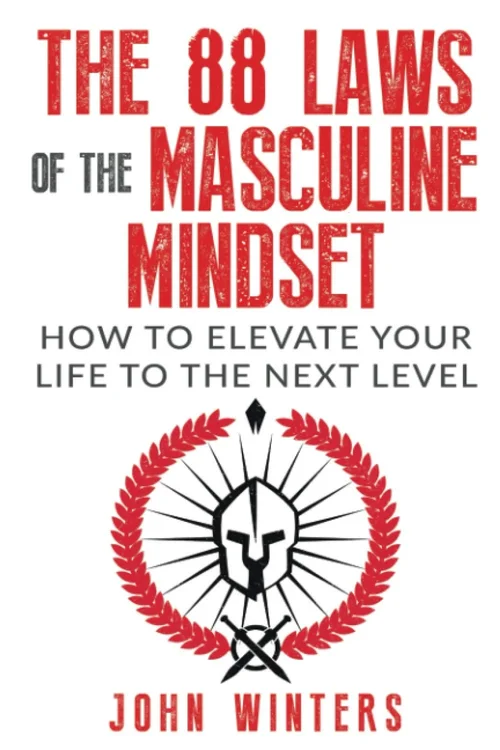
"This book can also be used as a reminder and you can re-read it every week to reload the most important mindset and personal development principles back into your mind."
— John Winters, The 88 Laws Of The Masculine Mindset
The Exhaustion of the Grind
Rain drummed against the glass partition of a shared workspace in downtown Chicago. A guy in a faded hoodie sat across from me, staring at a spreadsheet that hadn’t changed in three hours. His eyes were red. He kept tapping a pen against his knee like a metronome set to a dying tempo. He had built three side projects in eighteen months. All of them collapsed under their own weight. He called it dedication. I called it structural failure.
Hustle culture sells a very specific lie. It tells you that volume equals value. It tells you that if you just post more, ship faster, and sleep less, the market will eventually reward you. The market doesn’t care about your fatigue. It cares about resonance. When you treat your work as an assembly line, you strip out the very thing that makes it viable. You trade depth for velocity. And velocity without direction is just a faster way to hit a wall.
We confuse motion with momentum. They are entirely different physical states. Motion burns calories. Momentum shifts markets. The emotional toll of repeated creative failures doesn’t come from the rejection itself. It comes from the quiet realization that you were running on a treadmill while everyone else was building stairs. I used to believe that sheer output would eventually break through the noise. I was wrong. Noise is a byproduct of confusion, not a barrier to entry. You don’t outrun it. You step above it.
That shift requires a different operating system. You stop asking how to produce more. You start asking what actually deserves to exist. Visionary leadership isn’t about commanding a room. It’s about holding a line when the metrics say you should fold. It’s about protecting the integrity of the idea long enough for it to mature. Most founders abandon their core premise the moment a client hesitates or a launch underperforms. They pivot too early. They dilute the product. They become consultants instead of creators. The result is a portfolio of half-finished compromises.
I’ll admit something uncomfortable here. The alternative isn’t easier. It’s heavier. You trade the temporary high of a viral spike for the slow, grinding satisfaction of compounding trust. You will face silence. You will face ghosting. A potential partner will read your proposal and vanish into the digital ether. Your instinct will be to chase them. Don’t. Let the silence do its work. It filters out the tourists. It leaves you with the people who actually value the architecture you’re building.

The Architecture of creative entrepreneurship
It begins by treating your business as a living manuscript rather than a machine. You stop optimizing for extraction. You start designing for resonance. The traditional startup playbook assumes you’re building a product to sell. The artist assumes you’re building a world to inhabit. Both approaches require capital, but only one requires conviction. When you merge them, you get unconventional business models that don’t rely on venture capital or algorithmic luck. They rely on narrative gravity.
Blog artistry is the perfect example. Most people treat a website like a digital brochure. They stack features, write sterile copy, and pray for conversions. A blog artist treats the page like a gallery wall. Every headline is a brushstroke. Every paragraph is a deliberate arrangement of light and shadow. You aren’t asking visitors to click a button. You’re inviting them into a conversation they didn’t know they were missing. That shift changes the economics entirely. You stop competing on price. You compete on atmosphere.
I’ve watched founders burn through six figures chasing traffic. They buy ads. They tweak funnels. They hire consultants to diagnose their conversion leaks. The leak isn’t in the checkout page. It’s in the premise. You cannot optimize a hollow message. The data will always punish you for it. I learned this the hard way when I launched a course that performed perfectly on paper. The copy was tight. The funnel was airtight. The audience felt nothing. Because nothing was actually being said.
So I tore it down. I rebuilt it around a single, uncomfortable question: what do you actually want to be known for? The answer isn’t found in a marketing matrix. It’s found in the quiet hours when you’re alone with your own standards. That’s where visionary leadership is forged. It’s not about scaling a team. It’s about scaling your own tolerance for ambiguity. You have to sit with the discomfort of building something that doesn’t have a template. You have to trust that the market will eventually align with clarity.
I used to think structure was the enemy of spontaneity. I was wrong. Structure is the trellis. Spontaneity is the vine. Without the wood, the plant collapses under its own weight. Okay, that’s a bit poetic, but the pattern holds under scrutiny. The real danger isn’t planning. It’s planning without a pulse. You map out a twelve-month launch calendar, but you never leave room for the idea to breathe. You force the harvest before the soil is ready.
Unconventional business models thrive in that breathing room. They operate on asymmetry. You give away the framework. You charge for the implementation. You publish the philosophy. You sell the application. The research from Liverpool John Moores University on how creative ventures reshape urban ecosystems proves a broader point: when you anchor your work in cultural value, the financials stabilize on their own. The market doesn’t fund ideas. It funds ecosystems. And ecosystems take time to root. If you want to understand how to build that kind of internal architecture, look at the frameworks in building your own rules for living. It’s not about rigid discipline. It’s about intentional design.
Scaling this approach requires a fundamental redefinition of growth. Growth isn’t just headcount. It’s depth of impact. You build a core offering that stands alone. You surround it with peripheral products that extend the conversation. You create a subscription layer for ongoing dialogue. You host intimate gatherings for serious practitioners. The revenue streams aren’t siloed. They’re interwoven. Each one feeds the others. You don’t chase scale. You cultivate gravity. And gravity pulls the right people in without you having to shout.

The Architecture of Resilient Output
| Aspect | Hustle Culture | Creative Entrepreneurship |
|---|---|---|
| Core Motivation | External validation | Internal philosophy |
| Success Metrics | Revenue and hours logged | Impact and creative fulfillment |
| Work Pace | Relentless grind | Intentional rhythm |
| Long-Term Viability | High burnout rate | Sustainable growth |
You will face rejection. It’s not a possibility. It’s a structural requirement of the work. A gallery will decline your portfolio. A publisher will sit on your manuscript for eleven months before sending a form letter. A client will ask you to make it pop while completely missing the point of your design. The instinct is to apologize. To soften the edges. To bend the work until it fits their expectations. Don’t.
Compromise is a slow solvent. It doesn’t break your business overnight. It dissolves it over quarters. You start accepting projects that drain your creative reserves. You start writing copy that sounds like everyone else. You start measuring success by approval instead of alignment. That’s how you lose the very thing that made you valuable in the first place. Scaling a creative business without losing artistic integrity isn’t about saying no to everyone. It’s about saying yes only to the projects that extend your core premise.
I know how that sounds on paper. Idealistic. Detached from cash flow. Actually, I’m not detached. I’ve paid rent on delayed invoices. But the alternative is worse. You chase the money until you forget why you started. Then you’re just a freelancer with a nice website. The difference between a service provider and a visionary is the boundary. You draw it early. You enforce it consistently. You accept the short-term dip in revenue as the cost of long-term sovereignty.
Balancing creative work with a full-time job is the most common friction point for people at this stage. They treat the job as the enemy. It isn’t. It’s the foundation. You use the stability to fund the experiments. You use the constraints to sharpen the focus. You don’t quit on a whim. You build a parallel track until the revenue crosses the threshold. Then you step away. The transition should be a calculated migration, not a dramatic leap. If you’re struggling with the psychological weight of that transition, the principles in free thinking for men offer a practical roadmap for detaching from herd expectations without detaching from reality.
Ghosting is the modern rejection. It’s silent. It leaves you staring at an empty inbox, wondering if you misread the room. You didn’t. You just misread the timeline. Some clients aren’t ready for the work you’re offering. That’s not a failure of your craft. It’s a mismatch of readiness. You send a follow-up. You close the thread. You move to the next prospect. You don’t archive your portfolio out of shame. You keep shipping. The silence will break eventually. It always does.
Financial tools matter here. Not because spreadsheets are inherently artistic, but because clarity removes anxiety. When you know exactly how much runway you have, you stop making decisions from a place of scarcity. You start pricing from a place of certainty. That certainty changes how you negotiate. It changes how you deliver. It changes the entire posture of your work. You protect your ideas by documenting them. You timestamp your drafts. You register your trademarks. You don’t operate from paranoia. You operate from preparedness.
The Counterargument: Isn’t It Just Privilege?
You might think this entire framework requires a safety net. A trust fund. A partner who covers the bills while you find your voice. That’s partially true. Financial cushion removes friction. But it doesn’t create vision. I’ve seen people with unlimited capital produce sterile, forgettable work. I’ve seen people starting with zero dollars build empires out of sheer architectural discipline. The difference isn’t the bank account. It’s the tolerance for delayed gratification.
Step-by-step legal and financial setup for launching a solo creative venture doesn’t require a degree in corporate law. You register the entity. You separate the accounts. You draft a simple operating agreement. You protect the intellectual property. You track the expenses. Then you stop treating administration as the enemy and start treating it as the guardrail. The structure buys you freedom. It doesn’t restrict it.
I used to believe that bureaucracy killed art. Now I see it as the frame. A frame doesn’t limit the painting. It holds it steady so the world can actually see it. You build the business so the work can survive. You don’t build it to replace the work.
The kettle clicks off. The keys are sorted. The invoices are filed. I close the drawer. The screen glows in the dim room. A single cursor blinks on a blank page. It doesn’t ask for permission. It just waits. You type the first line. The mortar sets.
Frequently Asked Questions
What is the difference between creative entrepreneurship and hustle culture?
Creative entrepreneurship focuses on building value-driven ventures aligned with your personal philosophy, while hustle culture prioritizes relentless grinding and chasing vanity metrics. By shifting your focus to meaningful work and sustainable pacing, you avoid burnout and create lasting impact.
How do I build a sustainable creative business without burning out?
You build a sustainable creative business by setting clear boundaries, prioritizing deep work over busywork, and aligning your revenue streams with your core values. This intentional approach replaces toxic overwork with consistent, manageable progress that honors your well-being.
Can creative entrepreneurship be profitable long-term?
Yes, creative entrepreneurship consistently generates long-term profitability because it cultivates authentic audience loyalty rather than relying on short-term viral trends. When your business reflects your genuine philosophy, customers stay engaged and willing to support premium offerings over time.
Why does hustle culture fail for creative founders?
Hustle culture fails for creative founders because constant overwork stifles the innovation and mental clarity required for original thinking. True creative entrepreneurship thrives on rest, reflection, and intentional pacing, which ultimately outlasts the unsustainable grind.